
Why Service Contractors Keep Bleeding Money (And How We Stop It)
You hired an office manager to run operations. Instead, she spends 20 hours a week re-entering data between your field app, QuickBooks, and spreadsheets. Your techs finish a job at 3pm but the invoice doesn't go out until tomorrow because someone has to manually create it. You have three different systems that don't talk to each other, and the 'system' is actually Karen knowing where everything is.
This isn't a people problem. It's a workflow problem. And it's costing you thousands every single month in wasted labor, billing delays, and errors.
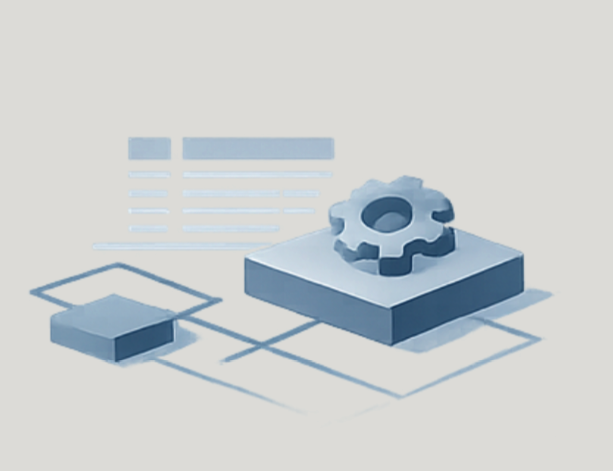
Reduce Friction Without Disruption
Operational improvements fail when they assume ideal conditions.
Our work is designed to:
respect how teams actually work today
avoid large, disruptive rollouts
limit retraining where possible
sequence changes so nothing breaks downstream
Progress should feel steady and controlled — not chaotic.

Focus on the Handoffs
Most problems don’t live inside a single system.
They live between systems, roles, or steps.
That’s where we spend our time:
handoffs between field and office
transitions from sales to operations
gaps between finance and delivery
manual bridges holding systems together
Fixing these areas tends to create clarity quickly.

How Engagements Typically Begin
Most engagements start with a short discovery to understand:
where work slows down
which handoffs create friction
what constraints matter most
what should not be changed
From there, scope and sequencing become clear, and execution follows in measured steps.

Start With What Already Exists
Every organization already has systems, processes, and constraints in place.
That’s where the work starts.
Before recommending change, we look closely at:
existing tools and workflows
how information moves between teams
where work slows down or gets re-entered
what cannot be disrupted
In many cases, meaningful improvement comes from connecting and stabilizing what’s already there, not replacing it.

Platform-Agnostic by Design
We work across a range of financial, operating, and workflow platforms.
Some relationships are formal integration or solutions partnerships; others reflect hands-on experience inside real operating stacks.
We don’t sell software.
We don’t prescribe a specific toolset.
Recommendations are made based on fit, constraints, and outcomes, not incentives.
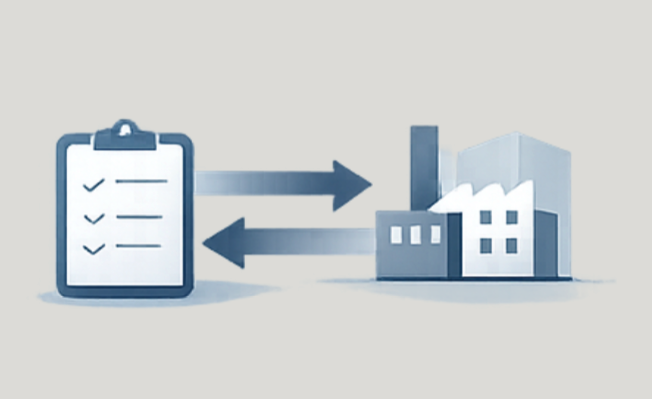
What This Work Is — and Isn’t
This work is:
diagnostic before prescriptive
focused on systems and workflows, not tools
designed for operators who feel things are harder than they should be
This work isn’t:
staff augmentation
generic automation
a rip-and-replace IT project
a packaged, one-size-fits-all solution
Fit matters. When it’s right, progress is usually obvious early.

Frequently Asked Questions
-
We help businesses clean up and connect their operational systems so work flows clearly from request to completion. This includes workflows, customer data, quoting, ticketing, invoicing, and field-to-office visibility.
-
We don’t sell software. We help teams make better use of the systems they already rely on by improving structure, clarity, and how tools work together.
-
We most often work with service-based and operationally complex businesses that have outgrown ad-hoc processes and want clearer, more connected systems without a full replacement.
-
No. Our approach is incremental by design. Improvements are made around live operations rather than forcing a disruptive overhaul.
-
Typically no. We’re best suited for established small-to-mid-sized operations that need structure without bureaucracy.
-
We work across a range of commonly used business tools and platforms. Our focus is on how systems support real operations rather than on any single piece of software.
-
Integrations are recommended selectively and only when they clearly reduce manual work, errors, or operational risk. We prioritize simple, maintainable connections over complex automation.
-
That’s common. We often help teams bring clarity to existing tools by tightening workflows and improving how information moves between systems rather than replacing everything.
-
Not typically. Many improvements can be made through better structure, configuration, or light automation. More complex work is only suggested when it provides clear, practical value.
-
Yes, though most examples are shared privately to respect confidentiality and context. If you’re exploring a potential fit, we’re happy to walk through relevant examples during a conversation.